
Charles’s Rise and Rejection
We Have Always Lived in the CastleThis flow traces Charles Blackwood’s arrival as a plausible relative, his pursuit of influence and family wealth, and his final failure to regain entry.
increasing Bearing strength in each event
 decreasing
Bearing strength in each eventdecreasingAn Heir Returns
An Heir Returns
A family connection
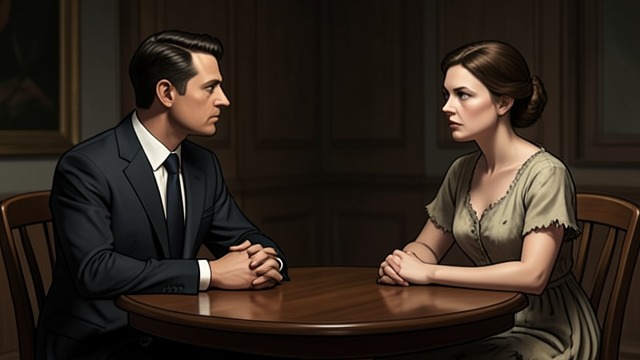
Charles arrives after his father’s death and presents himself as a cousin who has come to help. Constance recognizes his resemblance to John and welcomes him into the house.
Mixed motives
His early questions about money and the safe sit uneasily beside his offers to run errands and repair the step. The household cannot yet tell where assistance ends and self-interest begins.
His entry depends on trust, not force. That makes his growing presence especially threatening to Mary Katherine.
The Father’s Chair

The Father’s Chair
A place of authority
Charles sits in John Blackwood’s chair at dinner, occupying a position associated with the dead head of the family. He eats warily while Julian’s talk recalls the poisoning.
A household performance
Charles tries to seem practical and accommodating, but he also dismisses Julian’s history and tests the family’s resources. His behavior suggests that he wants to become central in a house that has operated without him.
The chair turns an ordinary meal into a contest over inheritance and authority. Mary Katherine sees the arrangement as evidence that the visitor intends to replace the family’s old order.
Possessions and Money

Possessions and Money
The valuables come into view
Charles reacts strongly when Mary Katherine nails the gold watch chain to a tree. He calls it valuable and considers what it might have been worth, while Constance treats the object as unimportant.
The household becomes an asset
Charles discovers buried silver dollars and wants to place them in the family safe. He also asks about John’s papers and clothing, making the house’s possessions a continuing subject of attention.
His conduct makes Mary Katherine’s suspicion more concrete. It also reveals that the sisters and Charles assign radically different meanings to inherited objects.
A Failed Claim to Discipline
A Failed Claim to Discipline
Threats replace hospitality
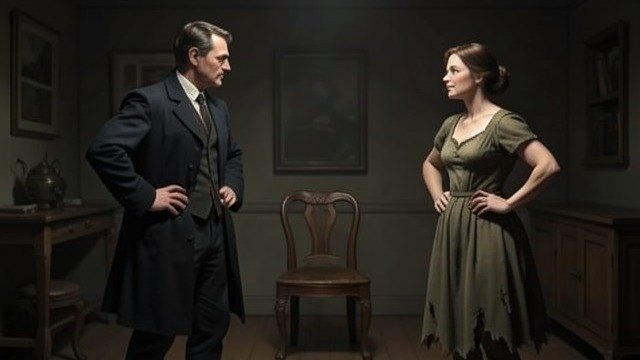
Charles demands that Mary Katherine explain the ruined room and asks why she should not be punished. He speaks as if he has acquired authority over her, while Constance tries to calm the household.
Julian refuses submission
Julian insults Charles and rejects his claim to command the family. His confusion about names does not prevent him from defending his papers and asserting that Charles has no right to dominate the room.
Charles’s control proves conditional and contested. The household’s disorder defeats the calm authority he tries to impose.
The Closed Door
The Closed Door
A final sales pitch
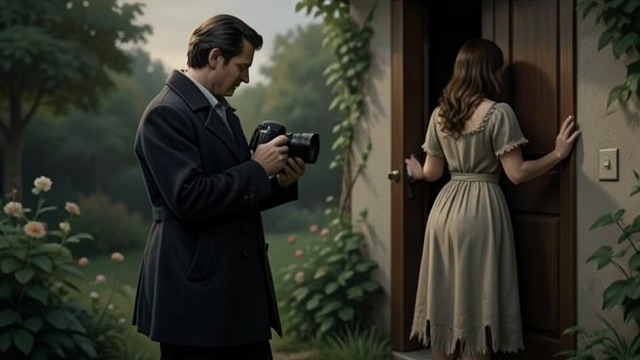
Charles returns with a photographer and tries to persuade Constance to open the door. He describes the sisters’ hidden fortune and offers a sentimental account of his regret.
Rejection without speech
The sisters remain hidden and do not answer. Charles leaves after the photographer loses patience, unable to turn family connection or emotion into renewed access.
His final visit confirms that his earlier closeness depended on an open door. Once the sisters control the threshold, his claims no longer give him power over their home.
On the Sunday of his arrival
At Charles’s first dinner
During Charles’s second and third days
Late in Charles’s stay, before the fire
Several weeks after the house fire
